Software that survives contact with production.
We are a software development firm in Vancouver, British Columbia, Canada, serving clients across North America. We design, build, and run websites, web and mobile applications, connected hardware and kiosks - the kind that carry real traffic, real money, and real consequences when they break.
- Building software for clients
- Since 2000
- Building software for clients
- Typical time to first release
- 4 wks
- Typical time to first release
Software we built has run at
- Tokyo 2020
- UFC
- Disney/Pixar
- Red Bull
- Universal
- Cleveland Cavaliers
- Hollywood Bowl
- MDLBEAST Soundstorm
- New Kids on the Block
- Event Safety Alliance
Screens, servers, and the hardware in between
Most engagements pull from more than one of these. You work with the same team throughout - no handoff to a delivery pod you have never met.
Websites & web applications
From a marketing site that loads fast to an application your business runs on.
Mobile apps
iOS and Android - native where the hardware matters, cross-platform where it does not.
IoT & embedded systems
Raspberry Pi, BeagleBone, Arduino, ESP32 - and the platform behind the fleet.
Kiosks & interactive installations
Unattended screens that stay up, recover on their own, and resist curious hands.
Platform, cloud & observability
Infrastructure that is boring on purpose - and instrumented so you can see it.
Data & AI
Pipelines and models that earn their operating cost.
Modernization
Getting off the system that is holding the business back.
Systems we put into production
A few engagements we can talk about publicly.
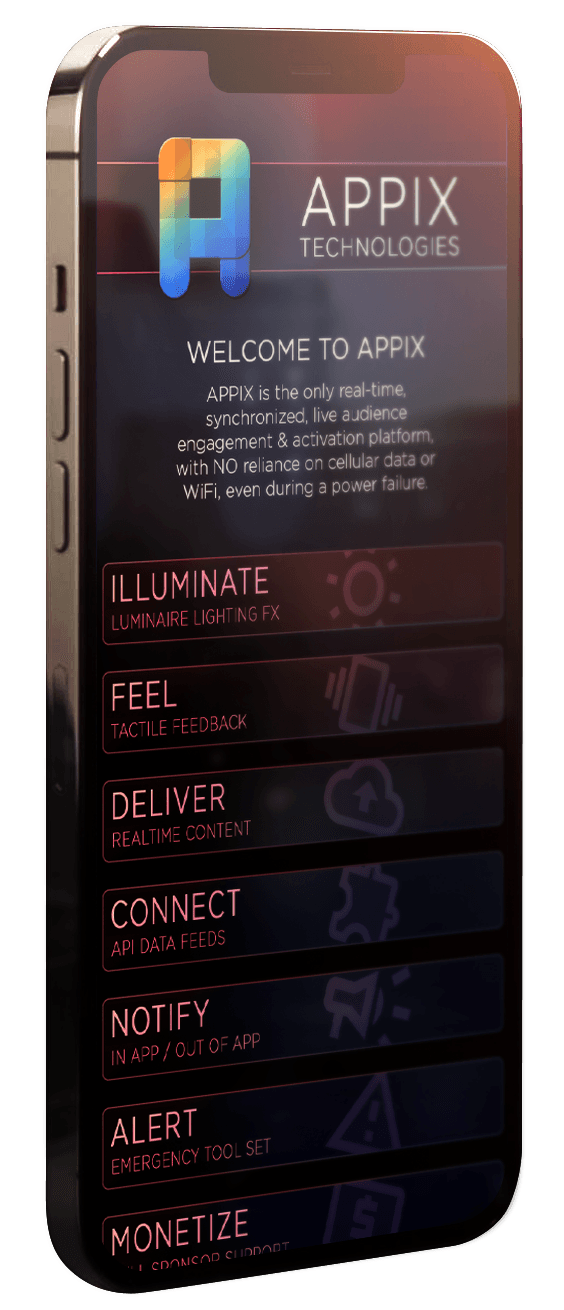
Broadcasting to twenty thousand phones when the network is gone
A patented live-experience platform that turns a packed venue full of phones into a coordinated second screen - synchronized light shows, live stats, exclusive content - without needing cellular or WiFi at all.
Read the case study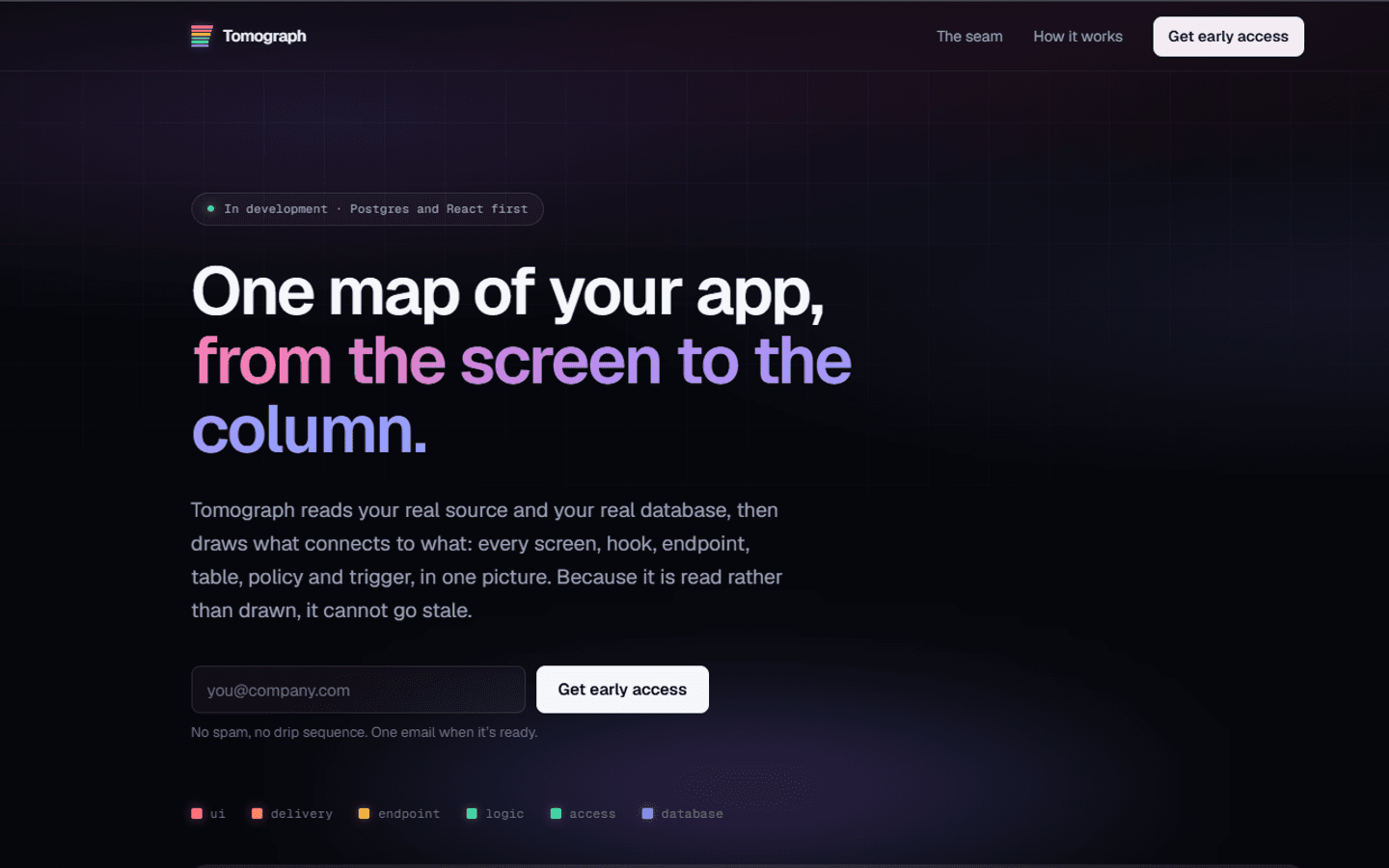
Reading an application in slices, from the screen to the column
A tool that reads a codebase and its database and draws one map across both - every screen, hook, endpoint, table, policy and trigger, and what connects to what. Because it is read from source rather than drawn by hand, it cannot go stale. In development, Postgres and React first.
Read the case study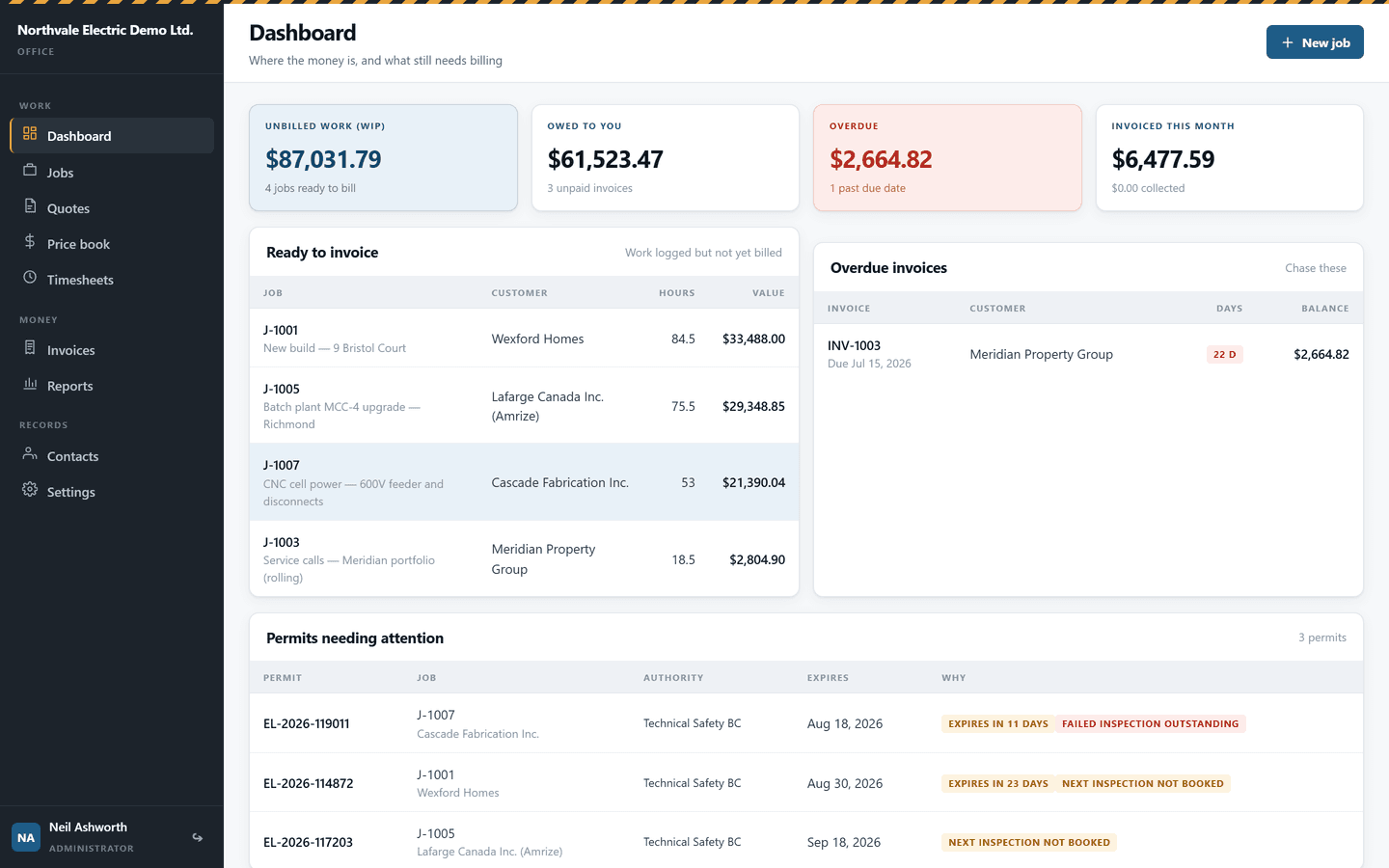
The invoice that writes itself out of work already recorded
Job costing and invoicing for an electrical contractor. Quotes become jobs, the crew logs hours against them, supplier bills get allocated to them, and the invoice assembles itself from whatever has not been billed yet. Built for British Columbia, down to the tax rule most software gets wrong.
Read the case studyWhat the people who booked us said afterwards
Mostly about APPIX, our live-events platform above - productions where the thing had to work the first time, in front of an audience, with no second take.
You guys were absolutely invisible from a production perspective. It’s very rare that when you add a new element, especially a technology, that it goes as smoothly as APPIX has gone, every single night of the tour.
APPIX added a truly unique and engaging element for Disney Concerts Coco Live-to-Film Concert Experience at The Hollywood Bowl which really brought the audience into the show as active participants. The technology was user friendly and easy to implement.
Night after night, APPIX’s innovation and creativity helped bring our MixTape Tour production to the next level with stunning visuals and, from what we saw with our own eyes, a genuinely effective fan engagement experience like no other!
We use AI tooling throughout our builds
Not as a novelty and not as a substitute for engineers. It is part of the toolchain, the same way a compiler and a test runner are - and we are direct about where it helps and where it does not.
More of the budget goes to judgement
Scaffolding, migrations, test fixtures and boilerplate are the cheapest things to generate and the least valuable to bill you for. Squeezing that work leaves more of the engagement for architecture and the decisions that actually cost money to get wrong.
Test coverage that would not otherwise get written
The edge cases everyone agrees should be covered, and nobody has time for, get covered. That shows up later as fewer regressions rather than as a line item.
Faster reading of code we did not write
On a modernization job the first weeks go into understanding a system nobody documented. Working through it with AI assistance shortens that considerably, which is usually the longest pole in the tent.
A second reviewer on every change
Automated review runs over every diff before a human sees it. It catches the dull mistakes - an unhandled branch, a missing index, a leaked secret - so review time is spent on design.
What does not change: an engineer owns every line that ships. Generated code gets read, tested and reviewed exactly like handwritten code, and nothing reaches your repository that we could not explain in a code review. Where a client needs their source kept out of third-party tools, we work that way instead - just tell us up front.
We do not sell you the stack we happen to like
The right choice depends on what you are building, what your team can maintain, and what you already run. We are fluent across these and will tell you plainly when your existing stack is fine and the rewrite is not the answer.
Web front end
Chosen for the rendering model the product actually needs.
- React
- Next.js
- Vue
- Nuxt
- Svelte
- Astro
- TypeScript
- Tailwind CSS
Back end
Whatever your team can maintain after we leave.
- Node.js
- Fastify
- NestJS
- .NET
- Go
- Python
- FastAPI
- Django
- Laravel
- Rails
Content & CMS
Usually inherited rather than chosen. We work on the ones already carrying a business.
- WordPress
- WooCommerce
- ACF
- WP-CLI
- Headless WordPress
- PHP
Mobile
Native when the hardware matters, cross-platform when it does not.
- Swift
- SwiftUI
- Kotlin
- Jetpack Compose
- React Native
- Flutter
Embedded & IoT
From a single sensor to a fleet in the field.
- Raspberry Pi
- BeagleBone
- Arduino
- ESP32
- C / C++
- Rust
- MicroPython
- Yocto
- Buildroot
- MQTT
- BLE
- Modbus
Data
Relational by default. Something else only when the shape demands it.
- PostgreSQL
- MySQL
- SQL Server
- Azure SQL
- SQLite
- MongoDB
- Redis
- ClickHouse
- dbt
- Airflow
Cloud & infrastructure
Your accounts, your bill, your keys.
- AWS
- Azure
- Google Cloud
- DigitalOcean
- Entra ID
- Docker
- Kubernetes
- Terraform
- nginx
Observability
Instrumented before it is optimized.
- Dynatrace
- OpenTelemetry
- Prometheus
- Grafana
- Sentry
- Loki
Not listed is not a problem. We have picked up unfamiliar stacks on client systems plenty of times - that is a normal part of taking on existing code.
We give a lot of it away
A suite of developer tools we built because we wanted them - an endpoint inspector, a webhook catcher, a JWT verifier, one-time secrets. Free, no sign-up, each backed by a real API.
No discovery theatre, no 90-page deck
An engagement is three phases. You can stop after any of them and still have something that works.
Scope before code
We start with a short discovery: what you are trying to change, what already exists, and what actually constrains the work. Reading an unfamiliar codebase with AI assistance turns the usual three-week archaeology dig into days, so the written plan you get - stack, sequence, number - arrives while the problem is still fresh.
Ship in weeks, not quarters
Work lands in small, reviewable increments behind CI. Scaffolding, migrations and test fixtures are generated rather than typed, which means more of the hours you pay for go into architecture and the decisions that are expensive to get wrong.
Hand over something you own
Documented infrastructure, tests that mean something, and a team that has been in the code with you. The edge cases everyone agrees should be covered actually get covered, because writing that tier of test is no longer the expensive part. No lock-in, no black box.
What we have learned shipping this stuff
What we find in apps built with AI
The same eight things, in roughly the same order. None of them mean the app was built badly. They mean it was built fast, which was the point.
A backup you have not restored is not a backup
Every team we meet has a nightly backup job. Most have never restored from it. Those are not the same thing, and the gap between them is where the bad afternoon lives.
Hiring a software development firm: questions worth asking
Choosing a development partner is mostly a due-diligence problem. These are the questions that actually separate firms, from a firm that answers them for a living.
Ready to build something that lasts?
Tell us what you are trying to ship. We will tell you how we would approach it - scope, stack, and timeline - before you commit to anything.